

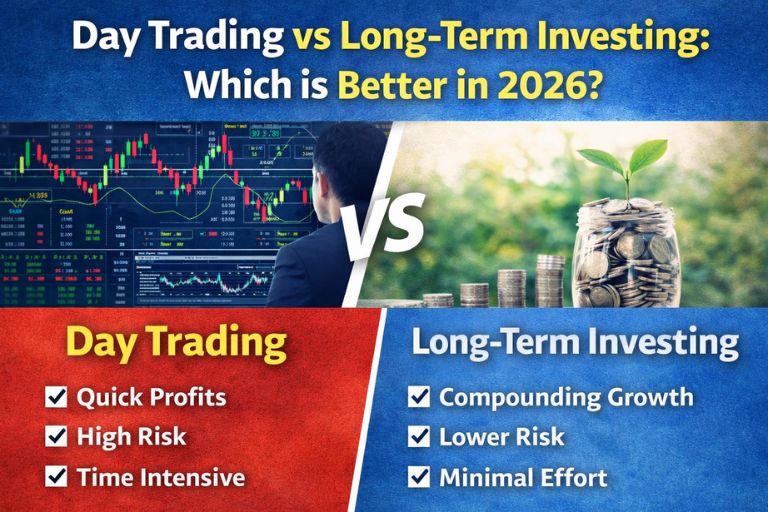
The stock market continues to evolve in 2026, offering more opportunities than ever before. With easy access to trading apps and real-time data, investors now face an important decision: should you focus on day trading or long-term investing?
What is Day Trading?
Day trading involves buying and selling financial instruments within the same day to take advantage of short-term price movements.
- Multiple trades in a single day
- Focus on short-term price changes
- Requires constant monitoring
- Uses technical analysis
What is Long-Term Investing?
Long-term investing involves holding assets for months or years to benefit from growth and compounding returns.
- Buy and hold strategy
- Focus on company fundamentals
- Less frequent trading
- Long-term wealth creation
Pros and Cons of Day Trading
Advantages:
- Quick profits
- No overnight risk
- Multiple daily opportunities
Disadvantages:
- High risk
- Requires time and skill
- Emotional stress
Pros and Cons of Long-Term Investing
Advantages:
- Lower risk over time
- Compounding growth
- Less time required
Disadvantages:
- Slow returns
- Market fluctuations
- Capital lock-in
Risk vs Reward Comparison
Day Trading
- Risk Level: Very High
- Reward Potential: High (short-term)
- Loss Probability: High
Long-Term Investing
- Risk Level: Moderate to Low
- Reward Potential: High (long-term)
- More stable growth
Real-Life Examples
Day Trading Example
A trader buys a stock at $100 and sells it at $102 the same day, making a quick profit. However, if the price drops, losses can occur quickly.
Long-Term Investing Example
An investor puts $5,000 into a strong company and holds it for 10 years. With an average return of 10% annually, the investment can grow significantly over time.
Which Strategy is Better in 2026?
- Choose Day Trading: If you have time, experience, and risk tolerance
- Choose Long-Term Investing: If you want stability and long-term growth
Conclusion
Day trading offers quick profits but comes with high risk and stress, while long-term investing provides stability and compounding growth. For most beginners, long-term investing is the better option.
Ultimately, the best strategy depends on your financial goals, risk tolerance, and lifestyle. You can also combine both approaches for a balanced investment strategy.