

Not long ago, investing followed a fairly predictable path. Most people built their portfolios around stocks, bonds, mutual funds, and sometimes real estate. Financial advisors often recommended diversification, encouraging investors not to put all their money into a single asset class.
That advice remains true today.
What has changed is the growing number of investment options available to everyday Americans. Among those options, cryptocurrency has become one of the most discussed topics in modern finance.
While some people still associate crypto with speculation and rapid price swings, others are beginning to view it through a different lens. Instead of treating it as a way to make quick profits, they see it as one component of a diversified investment strategy.
This shift in perspective is helping crypto gain broader acceptance.
Diversification is a simple concept.
The idea is to spread investments across different assets so that the performance of one investment does not completely determine the outcome of an entire portfolio. Investors use diversification to manage risk while maintaining opportunities for growth.
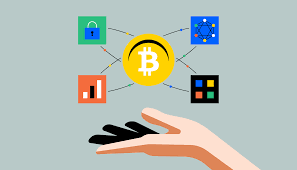
For decades, stocks and bonds served as the foundation of diversification strategies. Today, some investors are adding digital assets to the mix.
The reason is not always about chasing high returns.
Many investors are interested in owning assets that behave differently from traditional financial markets. When economic conditions change, different asset classes often respond in different ways.
This is where cryptocurrency enters the conversation.
Bitcoin, for example, operates independently of many traditional financial systems. Its value is influenced by factors such as adoption, technology developments, investor demand, and broader market sentiment.
Because of these unique characteristics, some investors view it as an additional layer of diversification.
Younger investors have played a significant role in this trend.
Many grew up during a period of rapid technological change. They are comfortable using digital platforms for banking, investing, shopping, and communication.
For this generation, owning a digital asset may feel less unusual than it does for older investors.
At the same time, financial education has become more accessible.
Podcasts, online courses, investment newsletters, and financial websites have made it easier for people to learn about markets and portfolio management. As knowledge grows, investors often become more interested in exploring a wider range of opportunities.
Cryptocurrency has benefited from that increased awareness.
Institutional involvement has also contributed to changing perceptions.
Large investment firms and financial organizations have shown growing interest in digital assets over recent years. While institutional participation does not eliminate risk, it has encouraged more investors to take cryptocurrency seriously.
People often feel more confident exploring an asset when established financial institutions are willing to study or invest in it.
Another reason investors consider crypto is the possibility of long-term growth.
Blockchain technology continues to evolve, and many supporters believe digital assets could play a larger role in future financial systems. While there are no guarantees, some investors are willing to allocate a small portion of their portfolios to assets they believe have long-term potential.
The emphasis is often on moderation.
Many financial professionals suggest that if investors choose to include cryptocurrency, it should represent only a portion of an overall investment plan rather than the entire strategy.
This balanced approach helps reduce exposure to volatility while still providing potential upside.
Volatility remains one of the most important considerations.
Cryptocurrency markets can experience large price movements over short periods of time. Investors must be comfortable with the possibility of temporary losses and should avoid making decisions based purely on emotion.
Successful long-term investing often requires patience and discipline.
Security is equally important.
Unlike traditional investments that are often held through established financial institutions, some crypto assets require users to manage their own wallets and security practices.
Understanding how to protect digital assets is an essential part of responsible ownership.
As technology improves, however, many platforms are becoming easier for beginners to use.
User-friendly interfaces, educational resources, and enhanced security measures have lowered barriers to entry. This accessibility has encouraged more individuals to explore digital assets as part of their broader financial planning.
Economic uncertainty has also influenced investor behavior.
Periods of inflation, changing interest rates, and market volatility often encourage people to reconsider how they allocate their money. During these times, investors frequently look for additional ways to diversify their holdings.
For some, cryptocurrency represents one of those opportunities.
Of course, diversification does not guarantee profits or eliminate risk. Every investment carries uncertainty, and cryptocurrency is no exception.
The key is understanding the role each asset plays within a larger financial strategy.
Rather than viewing crypto as a replacement for traditional investments, many investors see it as a complement to them. Stocks, bonds, real estate, and digital assets can all serve different purposes depending on an individual’s goals and risk tolerance.
This broader approach reflects how investing continues to evolve.
Financial markets today look very different from those of previous generations. Technology has created new opportunities, and investors are adapting to a rapidly changing landscape.
Whether cryptocurrency becomes a permanent fixture in most portfolios remains to be seen.
What is clear, however, is that more Americans are exploring digital assets as part of a diversified investment strategy. They are not necessarily abandoning traditional investments. Instead, they are expanding their options.
As financial innovation continues and digital assets become more widely understood, cryptocurrency will likely remain part of the conversation about building and protecting wealth.
For many investors, diversification is not about predicting the future perfectly.
It is about preparing for multiple possibilities.
And in an increasingly complex financial world, that mindset may be more important than ever.